
Unlocking Potential: The Synergy of AI and Data Science
The Intersection of AI and Data Science: Shaping the Future
In today’s rapidly evolving technological landscape, artificial intelligence (AI) and data science have emerged as pivotal forces driving innovation across various industries. These two disciplines, while distinct in their focus, often intersect to create powerful solutions that address complex challenges. This article explores the relationship between AI and data science, their applications, and the transformative impact they are having on the world.
Understanding AI and Data Science
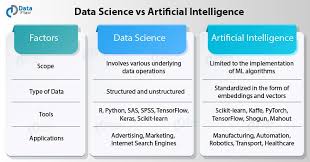
Artificial Intelligence refers to the simulation of human intelligence processes by machines, particularly computer systems. It encompasses a range of technologies including machine learning, natural language processing, robotics, and computer vision. AI systems are designed to perform tasks that typically require human intelligence, such as recognising patterns, making decisions, and understanding language.
Data Science, on the other hand, is an interdisciplinary field focused on extracting insights from structured and unstructured data. It combines techniques from statistics, computer science, and domain expertise to analyse large datasets and derive meaningful conclusions. Data scientists use tools such as statistical models and algorithms to interpret complex data patterns.
The Synergy Between AI and Data Science
The convergence of AI and data science is driven by their complementary nature. Data science provides the foundation for AI by supplying vast amounts of data needed for training intelligent systems. In turn, AI enhances data science by offering advanced analytical tools that can process data more efficiently than traditional methods.
This synergy is evident in machine learning, a subset of AI that relies heavily on data science techniques. Machine learning algorithms learn from historical data to make predictions or decisions without being explicitly programmed for specific tasks. This capability is invaluable in fields such as healthcare for predicting patient outcomes or finance for detecting fraudulent transactions.
Applications Across Industries
The integration of AI and data science is transforming numerous sectors:
- Healthcare: From personalised medicine to predictive diagnostics, AI-driven data analysis helps improve patient care by identifying trends in medical records and research findings.
- Finance: Financial institutions leverage AI models to assess credit risk accurately and automate trading strategies based on real-time market analysis.
- Retail: Retailers use customer behaviour analytics powered by AI to enhance personalised marketing strategies and optimise inventory management.
- Manufacturing: Predictive maintenance powered by machine learning reduces downtime by forecasting equipment failures before they occur.
The Future Impact
The future holds immense potential for further advancements at the intersection of AI and data science. As computational power increases alongside improvements in algorithmic design, these technologies will become even more sophisticated. We can expect greater automation across all facets of life—from autonomous vehicles navigating cities safely to intelligent virtual assistants managing daily tasks seamlessly.
However, with great power comes responsibility; ethical considerations must be addressed regarding privacy concerns associated with extensive use of personal information within these systems.
Conclusion
The collaboration between artificial intelligence (AI) & data sciences represents one of humanity’s most promising endeavours towards solving some pressing global issues efficiently & effectively while simultaneously opening new avenues for growth & development across various domains worldwide! Embracing this technological revolution requires not only technical expertise but also ethical foresight ensuring equitable distribution benefits derived thereof among all stakeholders involved therein!
7 Essential Tips for Mastering AI and Data Science
- Understand the basics of programming languages such as Python and R.
- Familiarise yourself with statistical concepts and techniques.
- Learn about machine learning algorithms and how they work.
- Practice working with real-world datasets to gain hands-on experience.
- Stay updated on the latest trends and developments in AI and data science.
- Collaborate with peers in the field to exchange knowledge and ideas.
- Develop strong problem-solving skills to tackle complex data-related challenges.
Understand the basics of programming languages such as Python and R.
Understanding the basics of programming languages such as Python and R is essential for anyone venturing into the fields of AI and data science. These languages are powerful tools that provide the foundation for developing algorithms, analysing data, and building machine learning models. Python, known for its simplicity and versatility, is widely used due to its extensive libraries like TensorFlow and PyTorch, which facilitate deep learning applications. R, on the other hand, is particularly favoured in statistical analysis and visualisation tasks due to its robust packages like ggplot2 and dplyr. By gaining proficiency in these languages, individuals can effectively manipulate data sets, conduct complex analyses, and implement AI solutions efficiently. This foundational knowledge not only enhances one’s technical skill set but also opens up a multitude of opportunities in various industries where data-driven decision-making is paramount.
Familiarise yourself with statistical concepts and techniques.
Familiarising oneself with statistical concepts and techniques is crucial for anyone venturing into the fields of AI and data science. Statistics form the backbone of data analysis, enabling professionals to make sense of complex datasets and derive meaningful insights. Understanding key concepts such as probability distributions, hypothesis testing, regression analysis, and variance is essential for developing robust models and interpreting results accurately. These statistical tools allow data scientists to validate their findings, assess the reliability of their predictions, and refine algorithms for improved performance. By mastering these techniques, individuals can enhance their analytical capabilities and contribute more effectively to innovative AI solutions.
Learn about machine learning algorithms and how they work.
Understanding machine learning algorithms and how they function is a crucial step for anyone delving into the realms of AI and data science. These algorithms form the backbone of AI systems, enabling computers to learn from data and make informed decisions without explicit programming. By familiarising oneself with various types of algorithms, such as supervised, unsupervised, and reinforcement learning, individuals can gain insights into their applications and limitations. This knowledge empowers professionals to select the most appropriate algorithm for specific tasks, optimise models for better accuracy, and innovate solutions across diverse fields like healthcare, finance, and technology. Furthermore, a solid grasp of machine learning principles enhances one’s ability to interpret results critically and address potential biases within datasets, ensuring ethical and effective deployment of AI technologies.
Practice working with real-world datasets to gain hands-on experience.
Gaining hands-on experience by working with real-world datasets is a crucial step in mastering AI and data science. Engaging with actual data allows practitioners to confront and solve practical challenges that arise in real-life scenarios, such as dealing with missing values, outliers, and diverse data formats. This experience helps develop critical thinking and problem-solving skills that are essential for effectively applying theoretical knowledge to tangible problems. Furthermore, working with real-world datasets enhances one’s ability to draw meaningful insights and make data-driven decisions, ultimately bridging the gap between academic learning and industry application. By practising on authentic datasets, aspiring data scientists and AI professionals can build a robust portfolio that showcases their capability to handle complex projects in a dynamic environment.
Stay updated on the latest trends and developments in AI and data science.
In the ever-evolving fields of AI and data science, staying updated on the latest trends and developments is crucial for anyone looking to remain competitive and innovative. As these technologies rapidly advance, new methodologies, tools, and applications are continually emerging, reshaping how industries operate. Keeping abreast of these changes not only enhances one’s understanding but also opens up opportunities to leverage cutting-edge solutions effectively. Engaging with online courses, attending industry conferences, subscribing to relevant publications, and participating in professional networks can provide valuable insights into the latest breakthroughs. By staying informed, professionals can adapt to new challenges more swiftly and contribute more meaningfully to their respective fields.
Collaborate with peers in the field to exchange knowledge and ideas.
Collaboration with peers in the field of AI and data science is invaluable for fostering innovation and expanding one’s understanding. By engaging with fellow professionals, individuals can exchange knowledge, share experiences, and explore diverse perspectives that may lead to novel solutions. This collaborative approach not only enhances problem-solving skills but also keeps practitioners abreast of the latest developments and trends in the industry. Networking with others allows for the cross-pollination of ideas, which can spark creativity and drive advancements in projects. Moreover, working alongside peers provides opportunities to build lasting professional relationships that can be beneficial throughout one’s career.
Develop strong problem-solving skills to tackle complex data-related challenges.
In the realm of AI and data science, developing strong problem-solving skills is essential for tackling complex data-related challenges. These fields often involve analysing vast amounts of data to identify patterns, make predictions, and drive decision-making processes. By honing problem-solving abilities, individuals can effectively navigate the intricacies of data interpretation and model development. This skill set enables professionals to devise innovative solutions to multifaceted problems, optimise algorithms, and improve the accuracy of AI systems. Moreover, robust problem-solving skills facilitate collaboration with cross-disciplinary teams, ensuring that diverse perspectives contribute to more comprehensive and effective outcomes. As AI and data science continue to evolve, the ability to approach challenges methodically and creatively will remain a critical asset for success in these dynamic fields.